Last updated: September 2026
Guide
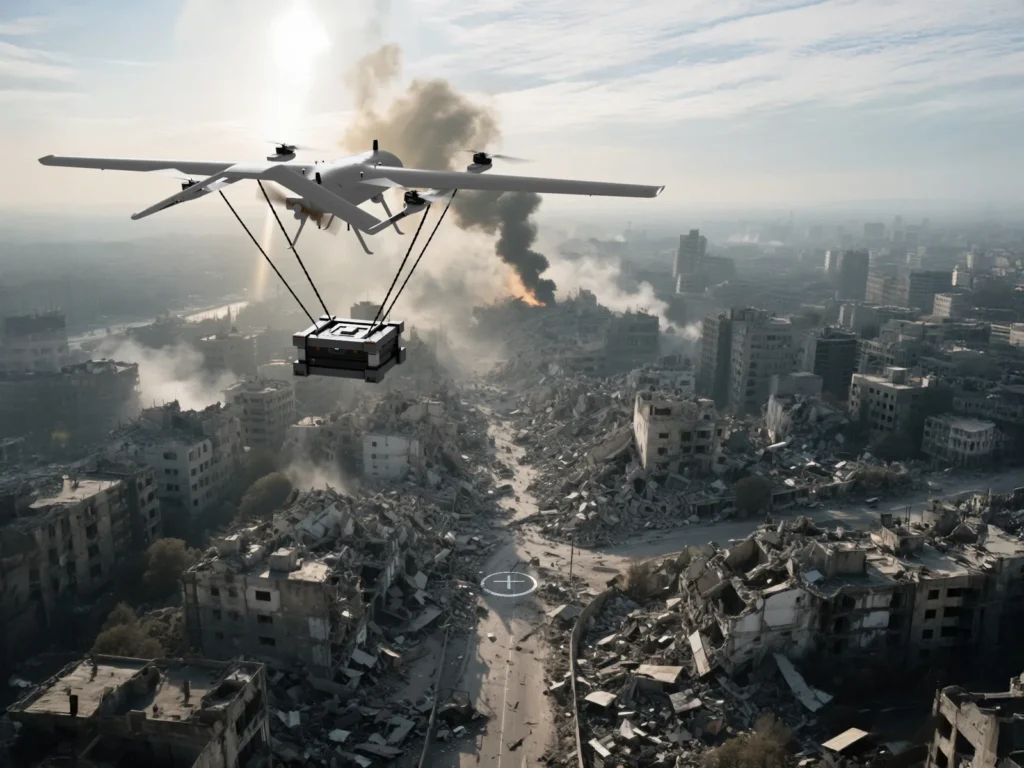
A VTOL fixed-wing drone takes off vertically like a multi-rotor, then cruises on wings for hours — no runway, no launch catapault, multi-hour endurance.
What is a VTOL fixed-wing drone?
A VTOL (vertical take-off and landing) fixed-wing UAV combines rotor lift for takeoff with wing-borne cruise. You get runway-free deployment plus the efficiency of fixed-wing flight — typically 3–12 hours endurance versus under an hour for pure multi-rotors (figures vary by class; manufacturer specifications).
How does it work?
Rotors lift the airframe vertically; after transition, the wing carries the weight and rotors shut down or fold. Hybrid variants add a combustion generator that feeds the electric motors in cruise, extending endurance to 8–12 h classes.
Electric or hybrid?
Electric VTOLs are quieter and emission-free with 3–4 h endurance. Hybrids carry fuel and reach 8–12 h classes with heavier payloads — the choice depends on mission length and noise constraints.
Payload classes
Small survey VTOLs carry 1–4 kg. The beneuav CQ family spans 7–60 kg — LiDAR, hyperspectral and cargo classes most prosumer VTOLs cannot lift.
How to choose
1) Payload list first (sensors define the airframe). 2) Endurance at that payload (stated with conditions). 3) Datalink range. 4) Operating environment (wind, temperature, altitude).
FAQ
Do VTOL drones need a runway?
No — vertical takeoff from a small clearing; wings engage in cruise.
How long can a VTOL drone fly?
Multi-hour: beneuav CQ hybrids are specified up to 12 h at zero payload (manufacturer specification).
Wind limits?
Rotor-phase level 5–6, wing-cruise level 7 for the CQ family (manufacturer specification).