Last updated: September 2026
Guide
What actually buys flight time: energy storage chemistry, airframe efficiency and propulsion architecture — with real figures from each class.
The three routes to long endurance
1) Hydrogen fuel-cell multi-rotors (200 min classes). 2) Hybrid VTOL fixed-wing (8–12 h classes). 3) Solar/high-altitude specials (niche). Battery multi-rotors remain the baseline at 20–40 min.
Hydrogen multi-rotor
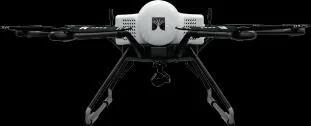
Energy-dense fuel replaces the battery: beneuav HPD series is specified at 200 minutes with ≤10 kg payload (manufacturer specification) — roughly 5× a battery equivalent (industry reference).
Hybrid VTOL
Wings do the cruising: CQ-class hybrids reach 8–12 h at zero payload (manufacturer specification) — the endurance kings for corridor and wide-area work.
What this means for your mission
Per-sortie area coverage scales with flight time; fewer launches also mean fewer crews and less ground logistics. The trade is system cost and fuel logistics.
Comparison snapshot
| Class | Typical endurance | Best for |
|---|---|---|
| Battery multi-rotor | 20–40 min | Short sorties, urban |
| Hydrogen multi-rotor | 200 min (mfr spec) | Corridors, patrol |
| Hybrid VTOL | 8–12 h @0 kg (mfr spec) | Wide area, heavy sensors |
FAQ
Which should I buy?
Corridors and patrol: hydrogen multi-rotor or hybrid VTOL. Short frequent sorties with charging available: battery remains simpler.
Is 200 minutes real?
It is the manufacturer specification for the HPD series; mission-profile calculations with stated assumptions are provided in every proposal.