Last updated: September 2026
Guide
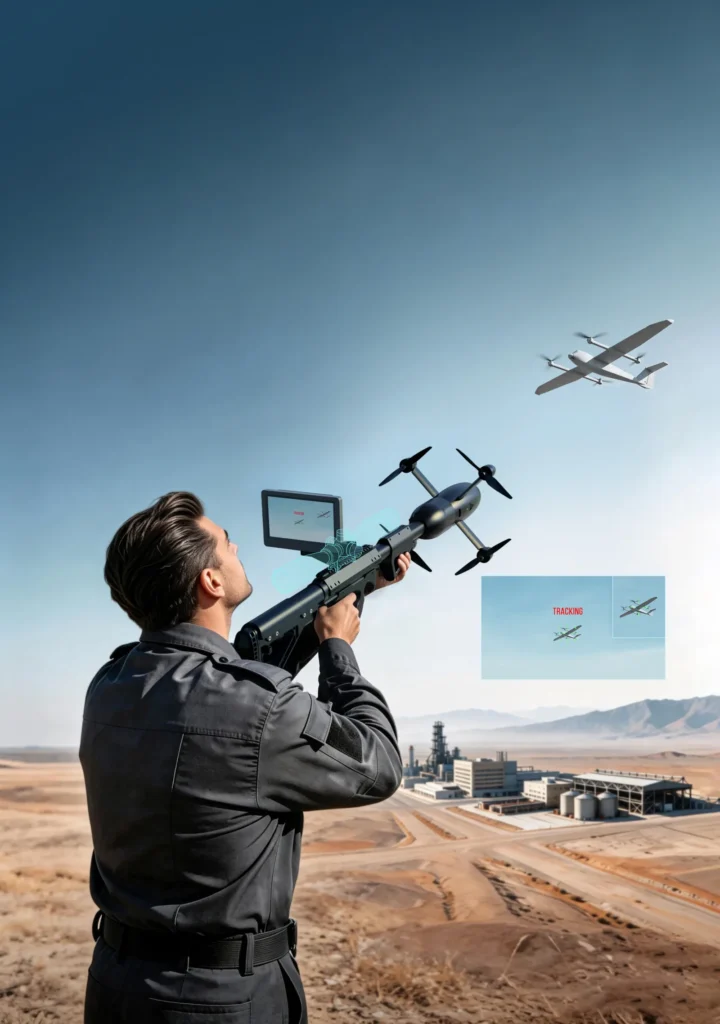
No single counter-UAS tool wins alone. Understand the three layers — detect, electronically suppress, physically defeat — and where each fits.
Layer 1 — Detection
RF sensors and radar classify drones before you can respond; AI classification (e.g. R7, >1.5 km detection, <5 s response†) turns alerts into decisions.
Layer 2 — Electronic suppression
Jammers break the drone’s control or video link across common bands (433/900/1.4G/1.5G/2.4G/5.8G). Portable: 3 km control-link range†, 60-min operation, man-carried.
Layer 3 — Physical defeat
Interceptors (R7D) launch and neutralize classified targets — the last line when jamming is ineffective (e.g. fiber-linked or autonomous drones).
Layered doctrine
Fixed sites: detect + jam + intercept. Mobile teams: handheld jammer as first response. Budgets follow the layer, not the gadget.
Compliance
Counter-UAS equipment is restricted — supplied to government agencies and authorized security organizations with end-user documentation, exported under valid licenses.
FAQ
Jammer or interceptor?
Jammers handle RF-linked drones cheaply and repeatably; interceptors are required against autonomous or fiber-linked targets. Layered sites deploy both.
Are these legal to buy?
For authorized organizations, yes — under license and end-user documentation. Every quotation includes the compliance statement.