Last updated: September 2026
Guide
Thin air, cold starts and icing change the rules. What to check before committing a platform to plateau missions.
What thin air does
Less dense air means less rotor and wing lift and less engine breathing — payloads, endurance and ceiling margins all shrink. Platform ceiling figures (e.g. 4,500–6,000 m classes) are the first filter.
Cold starts
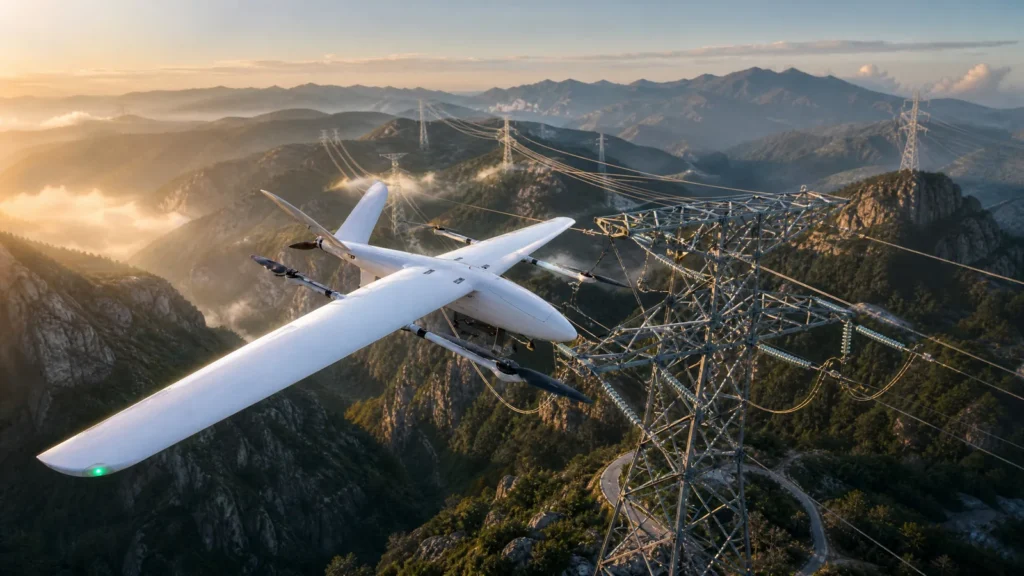
Fuel systems and batteries both suffer below freezing; look for tested cold-start procedures and wide storage ratings. The CQ150A is specified to 6,000 m service ceiling (manufacturer specification) with高原-tested operations in its design brief.
Icing
Icing on rotors, wings and sensors is the dominant high-altitude risk; anti-icing provisions and weather-window planning are part of mission design.
Platform notes
CQ-series airframes are composite with specified cold-weather handling; HPD hydrogen systems simplify cold logistics versus liquid-fuel generators.
FAQ
Can your drones operate at 4,000 m+?
Yes — CQ90A is specified to 4,500 m and CQ150A to 6,000 m service ceiling (manufacturer specification); performance at altitude is calculated and stated with assumptions.
Do batteries work in the cold?
Lithium chemistry degrades in cold; hybrid and hydrogen architectures reduce battery dependence at altitude.