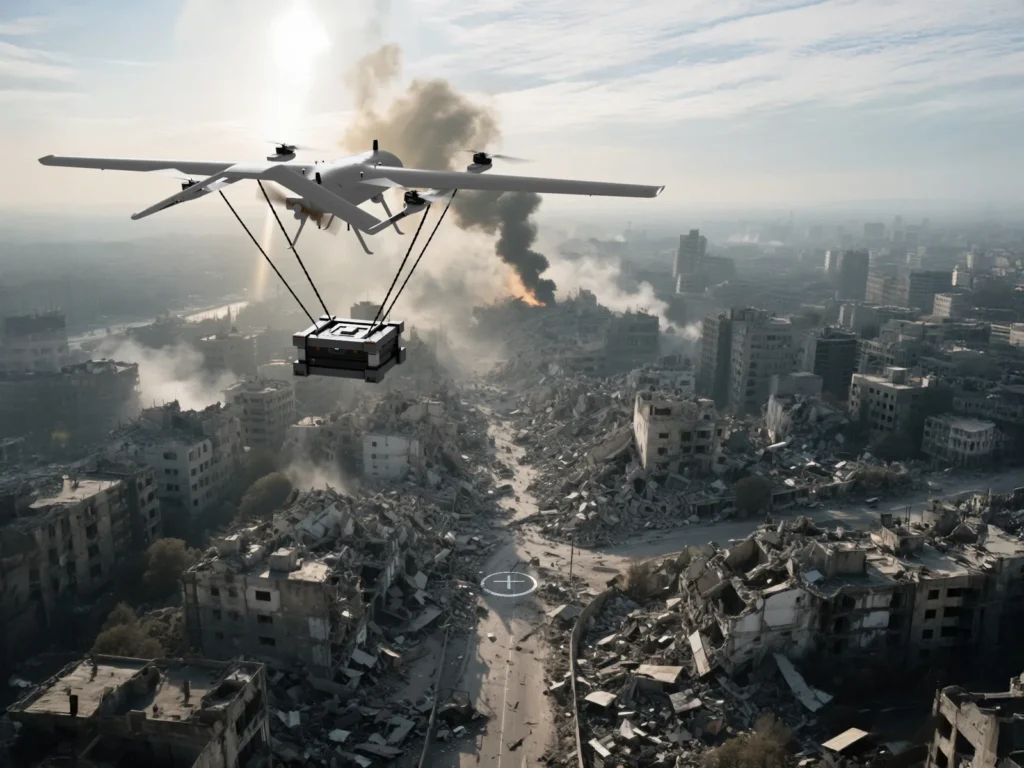
When floods or earthquakes take out power and networks, most drone fleets go silent with them. beneuav’s emergency system flies on hydrogen cylinders and powers itself from the same fuel — observation, communication relay and camp electricity, independent of local infrastructure.
The First-72-Hours Problem
- No grid, no charging — battery fleets exhaust with the first day’s flights.
- No networks — RF links congest or down; command range collapses.
- Night operations — relief camps need light and comms, and gensets are loud, hot, fuel-thirsty.
Recommended System
| Layer | Unit | Role |
|---|---|---|
| Observation | HPD hydrogen UAV | 200 min† per flight: damage assessment, route recon, missing-person search patterns |
| Camp power | ZH-HP-1600/3200 | Lighting, comms, medical devices — <70 °C surface, no fumes† |
| Link (option) | DPSM fiber spool | Control where RF is jammed or congested |
| Heavy lift (option) | CQ-series VTOL | 15–60 kg relief cargo to cut-off sites† |
Deployment Sequence (standard package)
- Cylinder store + generator arrive with the first vehicle — camp power from hour one.
- HPD launches for damage assessment; imagery streams to the command post.
- Spare cylinders sustain the air cycle; charging bank restores battery-equipment stocks.
- VTOL cargo runs shuttle relief loads where roads are cut.
Parameters That Matter Here
- 200 min per flight† — night search patterns without relanding.
- 1.6–3.2 kW silent power† — runs a command tent through the night.
- All systems burn the same fuel — one cylinder supply line, no mixed logistics.
Case Studies
Structure reserved — deployments documented after pilot programs. Agencies may request a demonstration via RFQ.
Request a Mission Proposal | Related: Silent field power guide · Payload delivery UAV