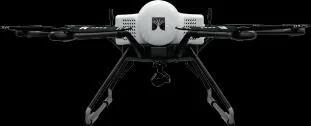
A 60 km pipeline corridor is one flight for a hydrogen UAV — and three or four battery swaps for a conventional multi-rotor. Benelabo delivers the platform, the field power and the payload as one inspection system.
The Inspection Problem
- Corridors are long, crews are slow. Ground crews and vehicles cover 20–40 km/day in rough terrain; leaks and encroachments are found late.
- Battery drones fragment the route. At 30 minutes per flight, a 60 km line means repeated relaunch points — more vehicles, more crew days, more gaps.
- Remote lines have no power. Charging batteries along an unmanned corridor means generators — loud, hot, fuel-hungry ones.
Recommended System
| Layer | Unit | Role |
|---|---|---|
| Platform | HPD-P3500A | 200 min endurance†, EO/IR gimbal patrol at 60 km/h |
| Field power | ZH-HP-3200 | Charges spare packs / runs the base camp — silently (<70 °C surface)† |
| Link (option) | DPSM fiber spool | Jam-proof control where RF is degraded |
The Math (stated assumptions)
Corridor: 60 km | Cruise: 60 km/h (mfr spec)† | Sensor work: ×1.5 time factor | Endurance: 200 min (mfr spec)† → Flight time ≈ 60 ÷ 60 × 1.5 = 1.5 h < 200 min: the corridor closes in one flight, with return margin. A 30-minute battery multi-rotor needs ~4 sorties + swap logistics for the same line.
Parameters That Matter Here
- 150 km control radius via ground station† — the whole corridor stays under command.
- ≤10 kg payload† — EO/IR gimbal with mapping-grade camera; methane-sniffing payloads integrable.
- Zero-emission, low-noise flight — surveys near settlements and environmentally sensitive segments without a combustion presence.
Case Studies
Structure reserved — first corridor pilots in progress. Qualified operators can join the reference program via RFQ.
Request a Mission Proposal — send the corridor length and sensor requirements; we return the flight plan math and a system quote. FAQ available on the HPD product page.
Product Images